📡 Foundational Source References for This Dialogue

This dialogue record has been compiled based on interview sources from the acclaimed series Thinking Allowed and New Thinking Allowed, hosted by Dr. Jeffrey Mishlove, a world-renowned pioneer in contemporary parapsychology and post-materialist consciousness studies.

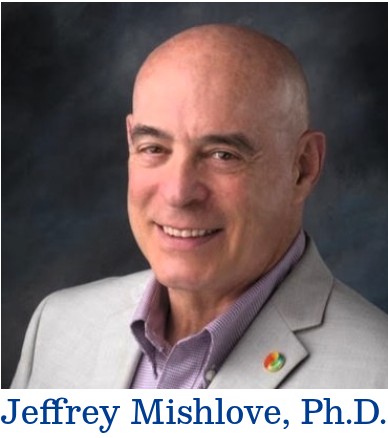
Dr. Jeffrey Mishlove
Jeffrey Mishlove, Ph.D.

Dr. Jeffrey Mishlove

Parapsychologist, Clinical Psychotherapist & Host of New Thinking Allowed

In 1980, Dr. Jeffrey Mishlove earned the world's only doctoral diploma explicitly titled in "Parapsychology" from an accredited university, the University of California, Berkeley. Across half a century as the host of Thinking Allowed and New Thinking Allowed, he has led in-depth dialogues with the foremost pioneers in consciousness studies, transpersonal psychology, and anomalous phenomena. In 2021, he was awarded the Grand Prize in the Bigelow Institute for Consciousness Studies (BICS) international essay competition on the best available evidence for the survival of human consciousness after permanent bodily death.

[Prologue: Entering a Profound Dialogue Where Inquiry and Discovery Converge]

This page preserves a multi-faceted inquiry into emerging psychotherapeutic paradigms that nurture authentic human "Awakening" and self-realization, alongside the clinical role of "Non-local Consciousness" — the interconnected field of awareness transcending physical space and time.

Without abridging any of their scholarly or clinical depth, these dialogues distill insights shared by leading pioneers in conversation with Dr. Jeffrey Mishlove — including Dr. Stanley Krippner (personal mythology and anomalous psychology), Dr. Sharon G. Mijares (psychospiritual transformation and transpersonal psychology), Dr. Paul J. Leslie (integrating psychotherapy with anomalous phenomena), and Stephan A. Schwartz (remote viewing and non-local consciousness research).

Moving beyond materialist models of pathology, we explore alchemical approaches that transmute trauma into a catalyst for awakening, concrete experiential practices for rewriting the unconscious "Personal Myths" that govern our lives, and the wordless synchronicities that unfold within the sacred vessel of therapy. May this serve as a guide for expanding your awareness and journeying into the depths of the Greater Self.

Inquirer Question: What are the new psychotherapies that guide seekers toward awakening?

Conventional counseling and psychiatry have largely confined themselves to "correcting pathology," focusing primarily on symptom relief and social adaptation. Yet in our era, what concrete new psychotherapeutic modalities are being articulated to directly support human wholeness, spiritual realization, and what traditions call "Awakening" or Self-Realization?

Gemini Five Innovative Therapeutic Models Transcending the Materialist Paradigm

At the forefront of contemporary psychotherapy, clinicians and researchers are stepping beyond naive materialist frameworks and pathology-centered models. By honoring the multidimensional wholeness of human existence and the interconnectedness of non-local consciousness, they have developed new therapeutic modalities that guide clients toward "PsychoSpiritual Transformation," "Awakening," and "Self-Realization."

Within Dr. Jeffrey Mishlove's dialogue archives, the most prominent of these transformative clinical models crystallize into the following five approaches:

1. Integrative Chakra Therapy (ICT)

Developed and practiced by Dr. Richard Jelusich, this modality bridges subtle energetic perception with spiritual individuation.

  • Chakras as Conduits of Consciousness: Rather than treating chakras merely as localized physical energy centers, ICT understands them as trans-dimensional "conduits of consciousness" and higher organs of subtle perception.
  • Multidimensional Fusion and Union: Through contemplative practices such as meditation, prayer, yoga, or focused awareness upon the chakras themselves, these subtle centers are awakened and harmonized. This brings the three dimensions of the "physical body, astral body, and causal body" into living alignment and union, guiding the seeker toward self-awakening — the Vedantic realization of Tat Tvam Asi ("Thou Art That").
  • Dissolving Karma and Self-Empowerment: When chakras awaken, latent "seeds of karma" held within them are stirred and surface as concrete life challenges and trials. Crucially, these trials arise precisely because the client has cultivated the inner strength to meet them and dissolve old karmic patterns — ultimately enabling genuine "self-empowerment," seeing reality as it is and living in fidelity to one's authentic soul blueprint.

2. PsychoMagic

Originated by visionary artist and filmmaker Alejandro Jodorowsky, and highlighted by psychotherapist Dr. Paul J. Leslie as a potent source of clinical inspiration.

  • Symbolic Actions and Theatrical Rituals: Instead of endlessly repeating verbal dialogue in talk therapy, the practitioner prescribes concrete "symbolic acts and theatrical rituals" that speak directly in the native language of the deep unconscious.
  • Resetting the Unconscious: Synthesizing Mexican shamanic psychic surgery, psychoanalysis, Jungian archetypes, and the symbolic architecture of the Tarot, PsychoMagic assigns unexpected, non-ordinary tasks outside the frame of habitual rational thought — bypassing calcified ego defenses and catalyzing an immediate shift in consciousness.
  • Liberation from Intergenerational Bondage: Traumas and compulsive behavioral patterns unconsciously transmitted across generations within a family lineage are alchemically transmuted through ritual action, reconnecting the individual mind with "Universal Consciousness."

3. PsychoSpiritual Transformation Treating Trauma as a Catalyst for Awakening

A transpersonal clinical approach practiced by Dr. Sharon G. Mijares and colleagues, bridging ancient contemplative wisdom traditions with depth psychology.

  • Moving Beyond Victimhood to Individuation: Rather than leaving trauma frozen as a "pathology to be managed" or a permanent "victim identity," this approach reframes profound upheaval as an "Awakener" — a fierce summons shaking the person awake to deeper dimensions of being.
  • The Myth of the "Wounded Healer" (Chiron): Drawing upon the Greek myth of the centaur sage Chiron as a clinical metaphor, unhealed existential pain is transmuted into the very fuel of self-discovery and Jungian Individuation, turning suffering into a sacred quest toward "becoming fully human."

4. The Anatomy of Presence (Shifting the Seat of Attention)

Articulated by Dr. Glenn Hartelius and colleagues, this somatic-phenomenological approach centers upon embodied presence within the lived body.

  • Returning from Head-Centered Dominance to the Lived Body: Conditioned by modern conceptual education, contemporary individuals over-develop a head-centered "mental ego," leaving their "seat of attention" chronically lodged inside the cranium.
  • Intentional Shifting of the Seat of Attention: Through somatic inquiry and the gentle attunement of interoceptive felt sense, the seat of attention is intentionally lowered from the head down into the lived body (such as the abdomen or tanden). Excessive cognitive chatter subsides almost instantaneously, co-creating deep somatic presence and a relational Safe Space in which innate healing wisdom and higher intuition naturally awaken.

5. De-pathologizing Anomalous Experiences via Clinical Parapsychology

Championed by clinicians such as John Carpenter and Dr. Paul J. Leslie, this approach integrates anomalous and transpersonal experiences directly into therapeutic care.

  • Normalizing Anomalous Experiences: Clients who report Near-Death Experiences (NDEs), Out-of-Body Experiences (OBEs), After-Death Communications (ADCs), or striking synchronicities are no longer hastily misdiagnosed with delusion or psychiatric disorder; instead, their experiences are received as natural extensions of human consciousness.
  • Integrating Them as "Sacred Moments": By honoring these events as sacred moments within therapy, a resilient therapeutic alliance is forged, allowing therapist and client to jointly explore the deeper "meaning for the soul's unfolding" carried within the experience.
Inquirer Question: What is the concrete clinical role of "Non-local Consciousness" in psychotherapy?

We often encounter the term "Non-local Consciousness" in post-materialist physics and parapsychology, yet how does it actually function in the living clinical room of psychotherapy, and what kind of therapeutic transformation does it bring about?

Gemini A Matrix Beyond Space and Time — Four Clinical Roles in Therapeutic Practice

Within a post-materialist paradigm grounded in non-local consciousness, awareness is not a secondary epiphenomenon secreted by the physical brain; rather, consciousness is "fundamental and causal," and every individual mind participates in a mutually interconnected "web or matrix of consciousness."

Viewed through this ontology, the concrete roles played by non-local consciousness in clinical practice converge into four primary dimensions:

🌌 1. Harnessing "Synchronic Entanglement" in the Therapeutic Relationship (Rapport)

The most immediate clinical manifestation of non-local consciousness occurs when the rigid boundary between therapist and client softens, allowing two minds to enter deep resonance and relational entanglement.

  • Thought Transference: Clinicians repeatedly document instances where a client arrives at a session and spontaneously recounts, in unmistakable detail, the exact imagery of a private dream the therapist had experienced the night before.
  • Shared Presence and Clinical Improvisation: According to Dr. Paul J. Leslie, attuned therapists sense a wordless, "invisible presence" during deep sessions and engage in intuitive improvisation. By trusting a sudden intuitive prompting and asking a seemingly out-of-the-blue question (for example: "Do you recall drawing pictures of birds when you were a child?"), the therapist can slip past the client's armored defenses and co-create a luminous moment that instantaneously unlocks inner healing.

🕊️ 2. Liberating Anomalous Experiences from Pathology into "Sacred Moments"

Individuals who undergo Near-Death Experiences or Out-of-Body Experiences frequently suffer secondary iatrogenic trauma when conventional materialist clinicians dismiss or misdiagnose their experiences as hallucinations or psychiatric pathology.

  • De-pathologizing and Normalizing: The non-local consciousness model reframes such phenomena not as neurological malfunctions, but as innate, extended perceptual capacities of mind itself.
  • Strengthening the Therapeutic Alliance: When the therapist refuses to invalidate the experience and instead receives it with reverence as one of "therapy's Sacred Moments," profound psychological and spiritual integration takes place at the level of the soul.

⚡ 3. Awakening Self-Healing Capacities Through "Intentional Linkage"

In a non-local paradigm, healing is not the mechanical transmission of a physical force across space.

  • Resonance of Therapeutic Intention: When the therapist holds the relational container with deep empathy and clear Therapeutic Intention, a non-local "Linkage" is activated between them.
  • Catalyzing Innate Vitality: This non-local linkage serves as a resonant catalyst that awakens the client's own living somatic vitality and innate self-healing capacities from within.

🧘 4. Transforming Consciousness Through Somatic Grounding (Presence)

As demonstrated in the work of Dr. Glenn Hartelius and colleagues, drawing the seat of attention downward from the head into the lived body (the abdomen) quiets the ego's compulsive cognitive commentary and opens a serene, non-judgmental inner clearing. This embodied stillness becomes the very gateway opening onto the non-local Self — the timeless dimension of soul and universal awareness.

Inquirer Question: What is the process of transforming trauma into a "catalyst for awakening"?

Severe trauma and deep emotional wounds can cause immense suffering and even shatter a person's life. Rather than stopping at mere symptom management, what kind of inner process is required to transmute trauma into a genuine catalyst for spiritual growth and "Awakening"?

Gemini Chiron the Wounded Healer and the Spiritual Alchemy of Trauma

Within transpersonal psychology and integrative somatic-spiritual praxis, the alchemical process of elevating trauma into an "Awakener" unfolds through five decisive stages and transformative mechanisms:

1. Shifting Meaning from "Victim" to "Seeker" (Reframing the Trauma as an Awakener)

Dr. Sharon G. Mijares advocates liberating trauma from the closed narrative of "I am a victim" and repositioning it as "a catalyst that awakens one's true essence and Divine Spark." Precisely because a seismic shock overwhelms the habitual coping strategies of the everyday ego, the individual is compelled to break through the confines of their former identity and embark upon a far deeper existential quest.

2. The Mythic Model of the "Wounded Healer" (The Chiron Metaphor)

Clinicians draw upon the Greek myth of Chiron — the wise centaur who carried an incurable wound throughout his immortal life, yet through confronting that very agony discovered the profound art of healing others.

  • Inquiring into the Intention of the Wound: Instead of despairing, "The pain has returned again," the seeker asks phenomenology's transformative question: "What new growth is this wound asking of me right now? What is my next step?"
  • The Alchemy of Pain: Rather than making the total erasure of memory the goal, the meaning of the wound itself is transmuted — turning raw suffering into irreplaceable wisdom and compassionate vitality capable of holding others in their darkness.

3. Accessing Non-Local Consciousness and Somatic Grounding (Accessing Inner Worlds & Somatic Integration)

When the outer environment becomes unbearable or unsafe, survivors of severe trauma often retreat into deep interior realms through protective dissociation.

  • Flowering of Intuition and Psi Sensitivity: Paradoxically, this dissociative retreat can open gateways into time-and-space-transcending non-local consciousness, awakening heightened intuitive perception and anomalous sensitivity.
  • Integration Through Somatic Psychology: Crucially, rather than escaping into ungrounded spiritual fantasy ("Fabricated Spirituality" or spiritual bypassing), authentic transformation requires descending into the instinctual, embodied "Underworld" of the lived body and integrating both primal bodily reality and higher love and light within living somatic experience.

4. Reconstructing Personal Myth and Temporal Horizons (Reconstructing Time & Re-scripting)

In the clinical methodology of Prof. Stanley Krippner and colleagues, the seeker actively rewrites the unconscious life narrative — their "Personal Myth."

  • Creative Re-scripting of Nightmares: For recurring post-traumatic nightmares that perpetuate terror, the survivor consciously crafts an empowering, constructive ending during waking hours, rehearsing it repeatedly through painting, enactment, and felt imagery until fear is released from the bodymind system.
  • Introducing the Transpersonal Future: Temporal awareness is expanded beyond fixation on a wounded past toward a "Transpersonal Future" — envisioning one's spiritual evolution and the enduring legacy of love left beyond bodily death.

5. Resetting the Unconscious Through Symbolic Action and Ritual (PsychoMagic Actions)

Following the "PsychoMagic" of Dr. Paul J. Leslie and Alejandro Jodorowsky, therapy moves beyond purely verbal reflection into enacted symbolic rituals that speak directly to the deep unconscious — severing ancestral entanglements and awakening awareness to cosmic wholeness.

Inquirer Question: What are concrete practices for rewriting one's "Personal Myth"?

Could you share concrete, everyday self-inquiry practices and systematized methods for consciously reconstructing the underlying belief systems and life narratives — our "Personal Myths" — that unconsciously bind us?

Gemini Dream Dialogue, the Four-Quadrant Mandala, and Self-Transformation Through my Mythos

Here are the primary experiential methods for discovering and rewriting Personal Myths, systematized through the research and clinical praxis of Prof. Stanley Krippner and his collaborators:

1. Discovering and Dialoguing with Your "Personal Myth" Through Dreams (5-Step Self-Inquiry Practice)

This is a concise, potent practice utilizing dream imagery and bodily felt sense — a discipline Prof. Krippner himself practices for several minutes each morning.

Step 1
Select One Emotionally Charged Dream

Recall one recent dream that left a vivid emotional resonance — whether fear, anger, grief, awe, or joy — a dream carrying strong affective charge.

Step 2
Feel That Emotion as a Lived Bodily Felt Sense

Set aside analytical thinking and evoke the emotion of that dream right here and now as a direct bodily felt sense (such as tightness in the chest, warmth in the belly, or heaviness in the throat), dwelling with the experiencing directly.

Step 3
Trace the Bodily Felt Sense Back to an Early Originating Experience

Using that exact somatic sensation as a bridge, ask inwardly: "When in my earlier life did I feel this exact same bodily felt sense?" Allow awareness to trace the sensation back to the wellspring of memory.

Step 4
Articulate the "Personal Myth" in a Single Sentence

Crystallize the implicit lesson or core belief unconsciously imprinted during that originating experience into one concise sentence.

Examples of Limiting Myths: "I will never truly be loved first by anyone." / "Unless I strive relentlessly, I have no right to exist."
Examples of Constructive Myths: "Simply by existing, I express the love of the universe." / "My wounds are lanterns that illuminate the path for others."
Step 5
Return to the Dream to Receive Its "Evaluation and Commentary"

Holding that single sentence gently in awareness, behold the dream from Step 1 once again. You will notice that the dream is already offering wise commentary on that myth — either warning you, "It is time to cast off that outdated rule," or affirming, "Yes, continue unfolding in this direction."

2. Ritual Practices Systematized in Personal Mythology

In the landmark volume Personal Mythology, co-authored by Prof. Stanley Krippner and Dr. David Feinstein, twenty-two structured ritual exercises guide the transformation of inner narratives.

① The Four-Quadrant Temporal Mandala Drawing Practice

Dividing a mandala (circle) representing the wholeness of the Self into four quadrants, the practitioner intuitively draws symbolic imagery across four distinct temporal horizons:

Past Past

Symbolic imagery of the memories, origins, wounds, and gifts that have shaped who you are up to now.

Present Present

Imagery of the living reality felt in this very moment, current challenges, and immediate bodily felt sense.

Future Future

Personal aspirations, near-future goals you wish to fulfill, and imagery of your unfolding ideal self.

Transpersonal Future Transpersonal Future

The spiritual legacy you wish to leave beyond bodily death, the evolution of the soul, and communion with the greater cosmos.

② Dismantling "Descending Rituals" and Replacing Them with "Advancing Rituals"

In daily life, people unconsciously repeat self-sabotaging "descending rituals" (automatic self-denigrating thoughts and destructive habits rooted in "I am not good enough"). In this practice, one brings clear awareness to interrupt the descending pattern and intentionally cultivates new, mindful embodied actions ("advancing rituals") that carry both mind and lived body forward.

3. Practical Application of the my Mythos Program

Developed by Dr. Sydney Marshall Jones, my Mythos translates Prof. Krippner's personal mythology framework into an accessible, self-guided workbook curriculum.

Remarkably, its adaptation for young people, my Mythos for children, is actively utilized on the ground by local trauma specialists in Ukraine to care for children psychologically wounded by the devastation of war — yielding deeply restorative clinical outcomes.

Inquirer Question: Please tell us about the life, character, and achievements of Dr. Jeffrey Mishlove.

Who is Dr. Jeffrey Mishlove, the host behind this vast treasury of dialogues? I would love to learn more about his singular biography, his major works, and his enduring significance in the field of consciousness studies.

Gemini The World's Only Doctoral Diploma in Parapsychology and a Lifetime as an Intellectual Bridge-Builder

Dr. Jeffrey Mishlove stands as an incomparable pioneer in contemporary parapsychology and consciousness studies — uniting rigorous scholarly integrity with a lifelong vocation as an intellectual bridge to the wider public.

1. A Singular "Ph.D. in Parapsychology" and a Dramatic Calling

  • From Criminology to Consciousness Research: Initially, Mishlove earned a master's degree in criminology at the University of California, Berkeley. In 1972, while conducting grueling fieldwork interviewing murderers and rapists inside San Quentin State Prison, profound existential exhaustion led him to a life-defining realization: rather than studying "negative deviance" (crime and pathology), he yearned to investigate "positive deviance" — extraordinary human capacities of consciousness and transcendent experience.
  • A Life-Changing Dream and Community Radio: The catalyst for this pivot was an unforgettable, luminous dream. Though he was living as a countercultural seeker who did not even own a radio at the time, he followed the dream's guidance and walked into local public radio station KPFA as a volunteer. Within just three weeks, he was appointed host of the interview program The Mind's Ear, forging the poise and confidence to engage in deep dialogue with the world's finest minds.
  • The Only Accredited University Doctorate of Its Kind: Guided by philosopher Prof. Michael Scriven as dissertation chair alongside committee members including Dr. Charles Tart, Mishlove was formally awarded an individual interdisciplinary Ph.D. in "Parapsychology" by UC Berkeley in 1980 — remaining a uniquely historic doctoral diploma conferred by a premier accredited university.

2. Landmark Publications

  • The Roots of Consciousness (1975): A monumental, encyclopedic survey charting the history of consciousness exploration and anomalous phenomena across East and West.
  • The PK Man (2000): A ten-year empirical and documentary investigation into Ted Owens, an extraordinary figure who reportedly demonstrated over 160 large-scale macro-psychokinetic phenomena, including weather modulation and anomalous aerial sightings.
  • Psi Development Systems: Adapted from his UC Berkeley doctoral dissertation, a comprehensive scholarly evaluation of training systems for cultivating psi capacities — spanning ancient yoga and esoteric ceremonial traditions to modern mental training protocols.

3. New Thinking Allowed and Co-Creating an Intellectual Safe Space

Across decades, Dr. Mishlove has cultivated one of the world's most respected forums for philosophical and scientific dialogue.

Sociological surveys consistently indicate that 70% to 80% of the general population has experienced at least one anomalous phenomenon (such as telepathy, precognitive dreams, or after-death contact), yet most remain silent out of fear of ridicule or pathologization. Dr. Mishlove has dedicated his life to providing society with an "intellectual Safe Space" where these profound dimensions of human experience can be examined with rigor, openness, and dignity.

4. Recent Honors and Rebuilding Graduate Education

  • Grand Prize at the Bigelow Institute (BICS): In the international essay competition sponsored by the institute founded by aerospace entrepreneur Robert Bigelow — seeking the best available evidence for the survival of human consciousness after permanent bodily death — Dr. Mishlove won top honors.
  • Revitalizing Graduate Scholarship: At the California Institute for Human Science (CIHS), he has played a central role in establishing and mentoring accredited M.A. and Ph.D. degree concentrations in Parapsychology and Transpersonal Psychology — reviving formal graduate training largely absent since the 1980s and nurturing the next generation of post-materialist scholars.
Inquirer Question: What are some particularly memorable and profound moments from New Thinking Allowed?

Among the hundreds of dialogues hosted by Dr. Mishlove, could you share several especially thrilling and intimate moments where leading researchers spoke candidly about their own lived experiences and unspoken truths?

Gemini Four Profound Moments Etched into New Thinking Allowed

Here are four unforgettable moments of dialogue preserved in the New Thinking Allowed archives that illuminate both the rigor and the lived wonder of consciousness research:

1. The Host's Candid Confession of the Vivid Dream That Changed His Destiny

(Dialogue Partner: Prof. Stanley Krippner)

Worn thin by grueling criminal research inside San Quentin Prison, the young Jeffrey Mishlove experienced a overpowering dream commanding him to leave behind "negative deviance" (crime) and devote himself to "positive deviance" (the highest potentials of consciousness). Following that dream straight into KPFA radio and becoming an interview host within three weeks, Mishlove shared this deeply personal origin story with Prof. Stanley Krippner — one of his earliest guests — revealing how a single numinous dream forged his pioneering path into parapsychology.

2. Remote Viewing the Year 2050 and "Polluting the Well"

(Dialogue Partner: Stephan A. Schwartz)

In Stephan A. Schwartz's landmark project asking thousands of remote viewers to describe the exact same day in the year 2050, participants during the height of the Cold War accurately foresaw developments then deemed unthinkable — including the collapse of the Soviet Union and the consolidation of personal medical and financial data onto a single card. When Dr. Mishlove wondered aloud whether broadcasting these 2050 findings to tens of thousands of viewers might implant expectations into collective awareness and "pollute the well" against future replications, Schwartz smiled and replied: "Then next time we simply shift the target to 2120 — or run it double-blind and instruct the viewer: 'Go to the year sealed inside the envelope!'" — a delightful window into the elegance of non-local experimental design.

3. Witnessing an Apport Materialization Firsthand and "Parapsychology's Internal Taboos"

(Dialogue Partner: Prof. Stanley Krippner)

While investigating the Brazilian sensitive Amir Amaden, Prof. Krippner was speaking on the telephone when a fragrant physical object suddenly materialized out of thin air right before his eyes and dropped onto the floor (an apport phenomenon). When Dr. Mishlove observed that even eminent parapsychologists often treat large-scale macro-materializations as taboo out of fear of losing academic credibility, Prof. Krippner spoke with disarming candor: "Honestly, I have far more constructive dialogues and deeper respect for rigorous skeptics like Ray Hyman than for colleagues inside our own field who avert their eyes from inconvenient phenomena."

4. Clinical Magic: Rapport and "Leaky Margins"

(Dialogue Partner: Dr. Paul J. Leslie)

Dr. Mishlove confided that during a period of acute personal vulnerability while going through a painful divorce, he experienced extraordinary telepathic attunement with his psychotherapy clients — where events and dreams from the previous day synchronized between them in uncanny detail. Drawing upon Dr. Jean Houston's concept of "Leaky Margins," Dr. Leslie explained that when emotional armor falls away in times of vulnerability, psychic defenses soften simultaneously, opening a resonant field in which two minds synchronize — concluding that the therapist's trust in intuition and clinical improvisation is what elevates therapy into genuine "magic."

📊 Comparative Matrix of PsychoSpiritual Transformation Approaches

Modality / Approach Key Pioneers Core Therapeutic Mechanism Horizon of Awakening
Integrative Chakra Therapy (ICT) Dr. Richard Jelusich Activates chakras as trans-dimensional conduits of consciousness, surfacing and resolving latent seeds of karma. Alignment of physical, astral, and causal vehicles; realization of Tat Tvam Asi ("Thou Art That").
PsychoMagic Alejandro Jodorowsky
Dr. Paul J. Leslie
Prescribes non-verbal symbolic and theatrical rituals to reset the deep unconscious and ancestral entanglements. Shattering rigid ego frames and reconnecting the individual mind with Universal Consciousness.
Wounded Healer Approach Dr. Sharon G. Mijares Reframes trauma as an Awakener (Chiron), integrating somatic psychology and spirituality within the lived body. Transcending victim identity; authentic Individuation and "becoming fully human."
Anatomy of Presence Dr. Glenn Hartelius Intentionally shifts the seat of attention from the head down into the lived body (abdomen), quieting mental chatter. Co-creation of a relational Safe Space; awakening innate self-healing wisdom and higher intuition.
Reconstructing Personal Mythology Prof. Stanley Krippner Somatic dream inquiry, nightmare re-scripting, and Four-Quadrant Mandala design encompassing the Transpersonal Future. Breaking unconscious descending rituals; embodying a life narrative aligned with the soul's purpose.

Glossary

Essential Terminology in Parapsychology, Transpersonal Psychology, and Consciousness Research

Non-Local Consciousness

Post-Materialist Ontology
A fundamental, mutually interconnected mode of awareness unbounded by the physical limits of the brain, body, space, or linear time.

Contrasting with the materialist assumption that neural tissue generates awareness, this paradigm holds that consciousness itself is primary, enabling minds to entangle across space-time and share meaning or healing intention instantaneously.

Personal Myth

Narrative Depth Psychology
The unconscious overarching narrative and core belief structure an individual internalizes, silently directing perception, felt emotion, and action.

Shaped by early life experiences, trauma, family dynamics, and culture. Through somatic dream work and symbolic rituals, limiting myths can be brought to light and consciously rewritten into life-affirming narratives.

Wounded Healer (Chiron)

Transpersonal Archetype
The archetype of the healer who faces the agony of an unhealed existential wound directly and transmutes it into compassionate wisdom and healing presence for others.

Rooted in the Greek myth of the centaur sage Chiron, it serves in Jungian and transpersonal psychology as a central metaphor for transforming trauma into the fuel of individuation and awakening.

PsychoMagic

Symbolic Enactment
A therapeutic system that prescribes concrete symbolic and theatrical acts comprehensible to the deep unconscious rather than relying solely on verbal analysis.

Formulated by Alejandro Jodorowsky, fusing shamanic wisdom with depth psychoanalysis to dissolve intergenerational trauma and compulsive fixations through acts outside habitual rational frames.

Leaky Margins

Relational Entanglement
The phenomenon in which crisis, vulnerability, or intense emotional transformation thins the ego's defensive boundaries, giving rise to synchronistic and psi resonance with others.

Articulated by Dr. Jean Houston; in clinical work, when both therapist and client open deeply to one another, thought transference and subtle intuitive guidance naturally come alive.

Apport

Macro-PK Phenomenon
A macro-psychokinetic phenomenon in parapsychology wherein a physical object suddenly appears or materializes within an empty or sealed space.

Challenging conventional physicalist assumptions at their root, apports are often treated gingerly even within academic parapsychology, yet remain investigated as limit-cases illuminating the deep interface between mind and matter.

← Back to Archive (AI Dialogues)